Skip to content
Baking Guide

What to Look for in Fresh Bread

Learn how to spot fresh bread by its aroma, crust, crumb, and texture, plus simple storage tips to keep each loaf enjoyable at home.

By The Grove
· 4 min read
Photo illustrating: What to Look for in Fresh Bread

Choosing fresh bread is easier when you know what to look, smell, and feel for. This practical guide is for anyone buying a loaf, roll, or bakery treat and wanting better texture and flavour.

You’ll learn the signs of freshness, how those signs vary by bread style, what to check before buying, and how to store bread once you bring it home.

Key takeaways

  • Fresh bread should smell clean and inviting, with an aroma suited to its ingredients.
  • The crust, crumb, and texture should match the style of bread rather than follow one universal standard.
  • A gentle press can reveal whether the crumb has the expected softness and spring.
  • Choose bread based on how you plan to serve it.
  • Proper storage helps protect freshness after you leave the bakery.

Start with the aroma

Fresh bread should have a clean, inviting aroma that reflects its ingredients. Wheat breads may smell nutty and grain-like, while enriched breads can have a gentle buttery or milky scent. A flat, stale smell is a sign that the bread may no longer be at its best.

Trust your nose, but remember that strongly flavoured breads may naturally smell different. Herbs, spices, seeds, and sourdough cultures can all affect the aroma.

Check the crust and colour

Look for an evenly baked crust with a colour suited to the bread. A golden crust is common for many loaves, while darker breads may be intentionally deeper in colour. The surface should look dry and set rather than damp or unusually pale.

Texture varies by style. A crusty loaf should feel firm and crisp, while a soft sandwich loaf should have a tender exterior. Freshness is not about one ideal crust; it is about whether the crust matches the bread’s intended character.

Examine the crumb and texture

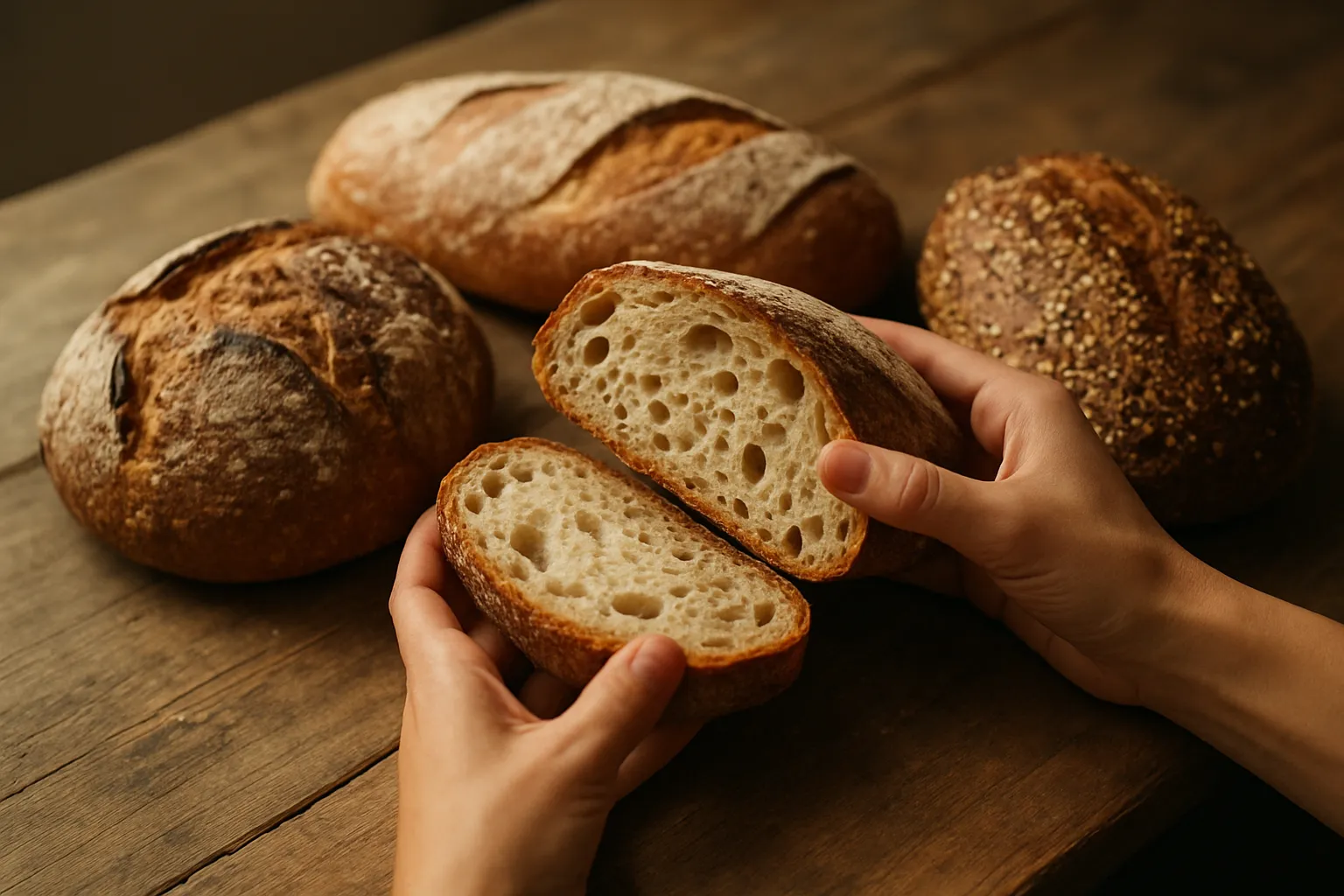
If the loaf is sliced or a sample is available, look at the inside. The crumb should appear evenly baked and feel soft or pleasantly chewy, not wet, gummy, or excessively crumbly. A gentle press should usually leave the bread with some spring.

Different breads have different structures. An airy crumb may be right for a rustic loaf, while a close, even crumb may be better for sandwiches. Choose the texture that suits how you plan to eat it.

Use the bread’s purpose as your guide

For toast, look for a loaf that slices cleanly and has enough structure to hold toppings. For sandwiches, an even crumb and flexible texture can make preparation easier. For serving with coffee or a meal, you may prefer a crusty loaf with a more pronounced flavour.

If you are buying rolls or pastries, check that they are free from excessive dryness and that their texture fits the item. A croissant should be flaky, while a soft bun should not feel hard or brittle.

Store it properly at home

Good storage helps preserve the texture you selected. Keep soft bread in a sealed container or bread bag at room temperature, away from heat and moisture. Crusty bread is often best kept in paper for short-term storage so the crust does not soften too quickly.

If you will not eat the bread soon, freezing it can help preserve quality. Slice it first if you want to remove only what you need, then thaw or toast portions as required. Avoid refrigerating most bread, as the cold environment can make it seem stale faster.

Frequently asked questions

How can I tell if bread is fresh without slicing it?

Check its aroma, appearance, and feel. It should smell pleasant, look properly baked for its style, and have a texture that is neither unusually hard nor damp.

Should fresh bread always have a crisp crust?

No. Crustiness depends on the type of bread. A rustic loaf may be crisp, while sandwich bread and enriched rolls are meant to be soft.

Why does bread feel gummy inside?

A gummy crumb can result from underbaking, excess moisture, or cutting the loaf before it has cooled properly. It is different from the moist, springy texture expected in some breads.

Is it better to store bread in the refrigerator?

Usually not for everyday bread. Refrigeration can make bread seem stale faster. Room-temperature storage or freezing is generally a better choice, depending on how soon you plan to eat it.

Can I freeze fresh bakery bread?

Yes. Wrap it well and freeze it in portions that suit your needs. Sliced bread can be toasted directly from frozen, while whole loaves can be thawed before serving.

Find Your Next Fresh Bake

Visit The Grove in Jaipur for freshly baked breads, pastries, and café favourites made for an enjoyable break.

The Grove
Discover artisanal coffee, fresh bakery delights, and cozy ambiance at The Grove in Jaipur.
Our services →
Share this article WhatsApp LinkedIn
← All posts